
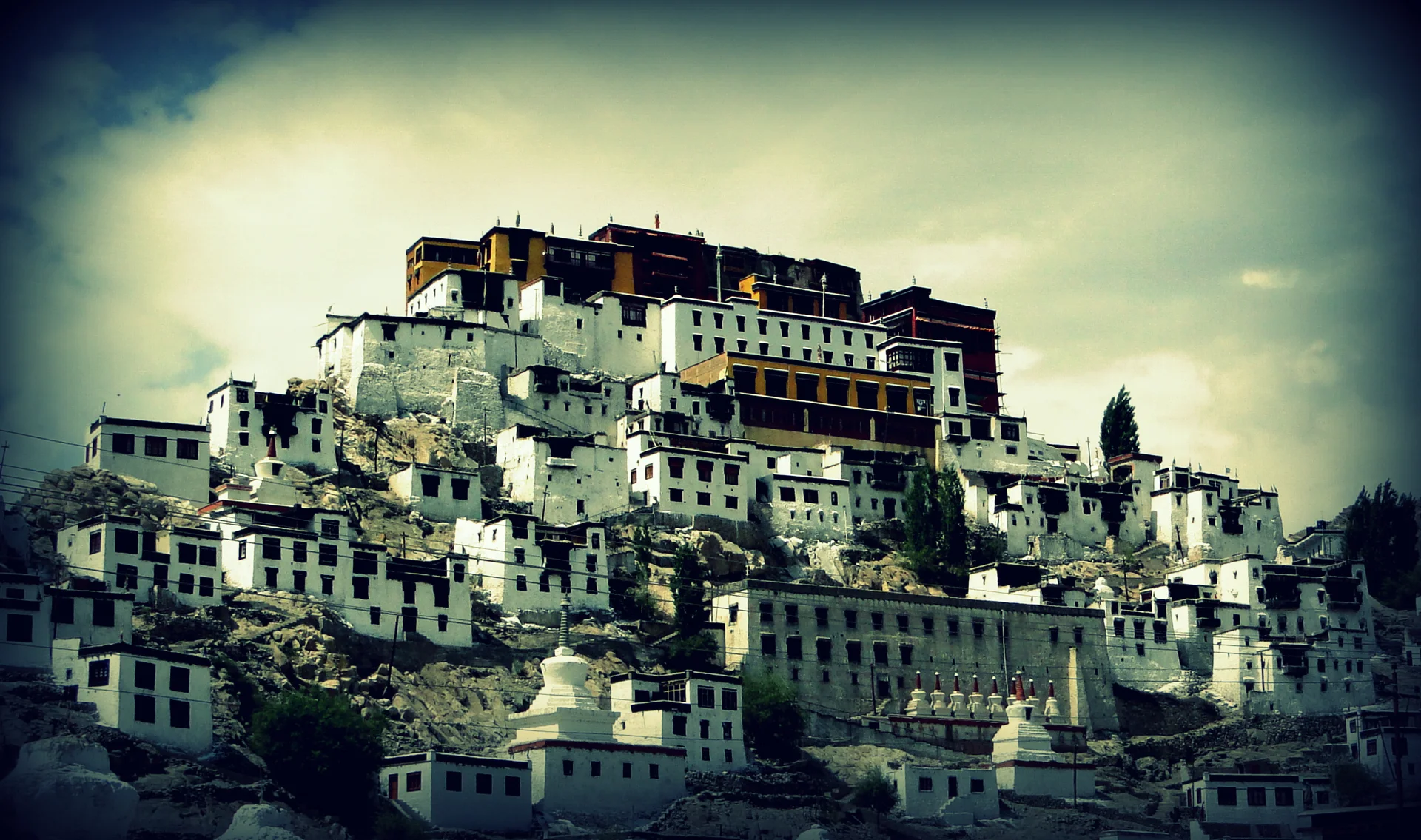
Leh is the best base for most first-time Ladakh trips because it gives travellers time to acclimatise before moving to higher routes such as Nubra Valley, Pangong Lake and Changthang.
Why visit Leh?
Leh combines culture, history and logistics in one compact mountain city. Travellers can explore monasteries, palace and stupa viewpoints, local markets and the Indus Valley while keeping the first days of the journey comparatively light.
What to see in Leh
- Leh Palace and old-town lanes
- Shanti Stupa viewpoints
- Thiksey, Shey and other Indus Valley monasteries
- Leh Market and local cafés
- Nearby Sham Valley and Indus–Zanskar confluence routes
How many days do you need?
Allow at least 2 nights in Leh at the beginning of a Ladakh trip. Longer holidays usually return to Leh between Nubra, Pangong, Tso Moriri, Hanle or Zanskar sectors.
Best time to include Leh
Leh is visitable through much of the year, but the widest choice of road circuits normally operates in the warmer months. Winter trips need a more selective route plan.
How to combine Leh in a Ladakh itinerary
Leh pairs naturally with Nubra Valley and Pangong Lake on classic trips, or with Hanle and Tso Moriri on longer Changthang itineraries.
Leh travel questions
Is Leh a good first stop in Ladakh?
Yes. Most itineraries begin in Leh so travellers can rest, acclimatise and complete local sightseeing before higher-altitude road sectors.
How many nights should I stay in Leh?
Two nights at the start is a practical minimum for many first-time trips; longer itineraries often include another Leh night before departure.
Which destinations are commonly combined with Leh?
Nubra Valley, Pangong Lake, Tso Moriri, Hanle, Kargil and Zanskar can all be combined with Leh depending on duration and season.